
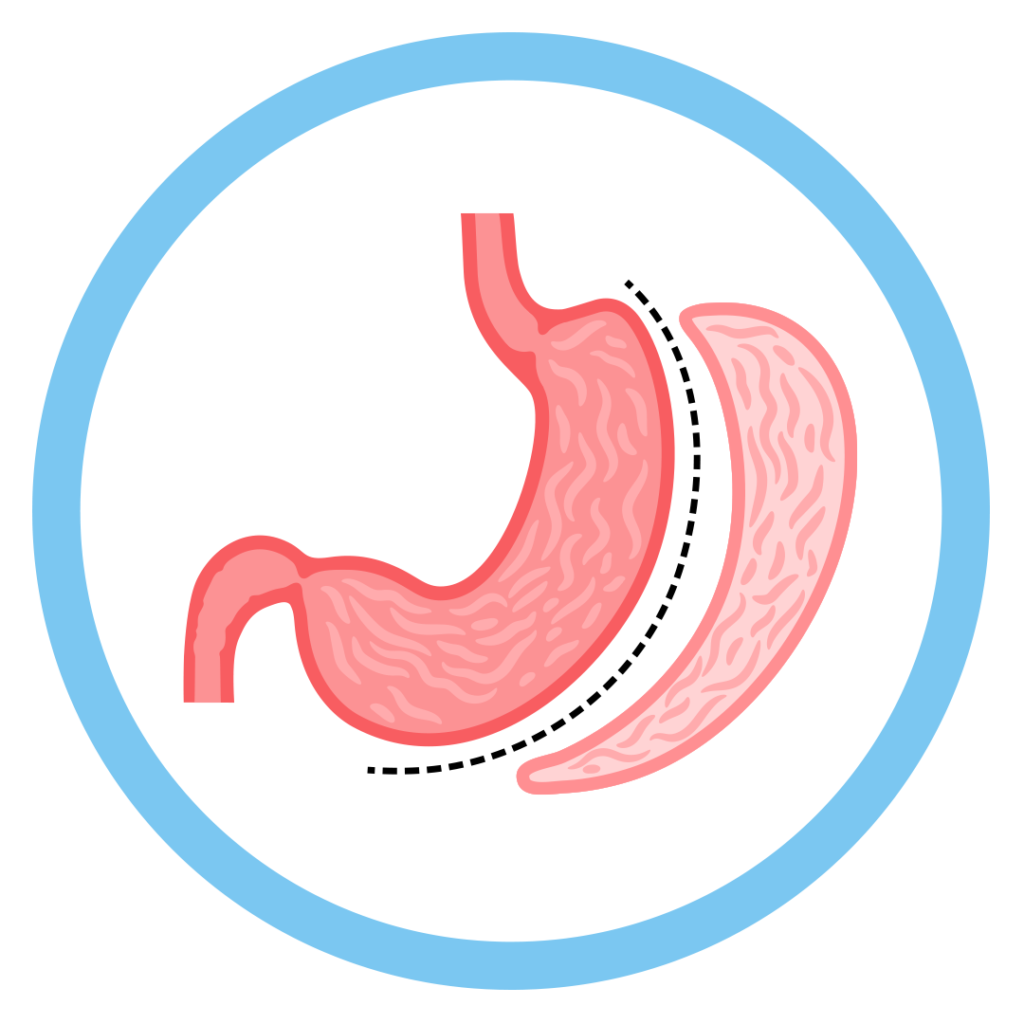
This procedure involves the removal of approximately 80% of the stomach. The surgery achieves weight loss through both restriction, by creating a smaller stomach, and complex metabolic changes in the gastrointestinal hormones. As a result, patients experience reduced hunger and earlier feelings of fullness when consuming food.
On average, individuals undergoing sleeve gastrectomy can expect to lose around 65 to 70% of their excess weight within a period of twelve to eighteen months.
Sleeve gastrectomies are typically performed using laparoscopic techniques and require a hospital stay of two to three days. Most patients can resume work within two to four weeks following the procedure.

This procedure involves the removal of approximately 80% of the stomach. The surgery achieves weight loss through both restriction, by creating a smaller stomach, and complex metabolic changes in the gastrointestinal hormones. As a result, patients experience reduced hunger and earlier feelings of fullness when consuming food.
On average, individuals undergoing sleeve gastrectomy can expect to lose around 65 to 70% of their excess weight within a period of twelve to eighteen months.
Sleeve gastrectomies are typically performed using laparoscopic techniques and require a hospital stay of two to three days. Most patients can resume work within two to four weeks following the procedure.
Conclusion: Though Sleeve Gastrectomy is generally considered a safe procedure, serious/major complications can still occur, although they are rare. Some possible complications include bleeding, infection, staple line leaks, and pulmonary embolism. It’s important to discuss potential risks and benefits with your surgeon before undergoing any bariatric surgery procedure.
One of India’s most highly trained and qualified bariatric surgeons, Dr. Amit Sood combines impressive experience with a deep knowledge of modern surgical techniques and a commitment to achieving the very best outcome for patients.
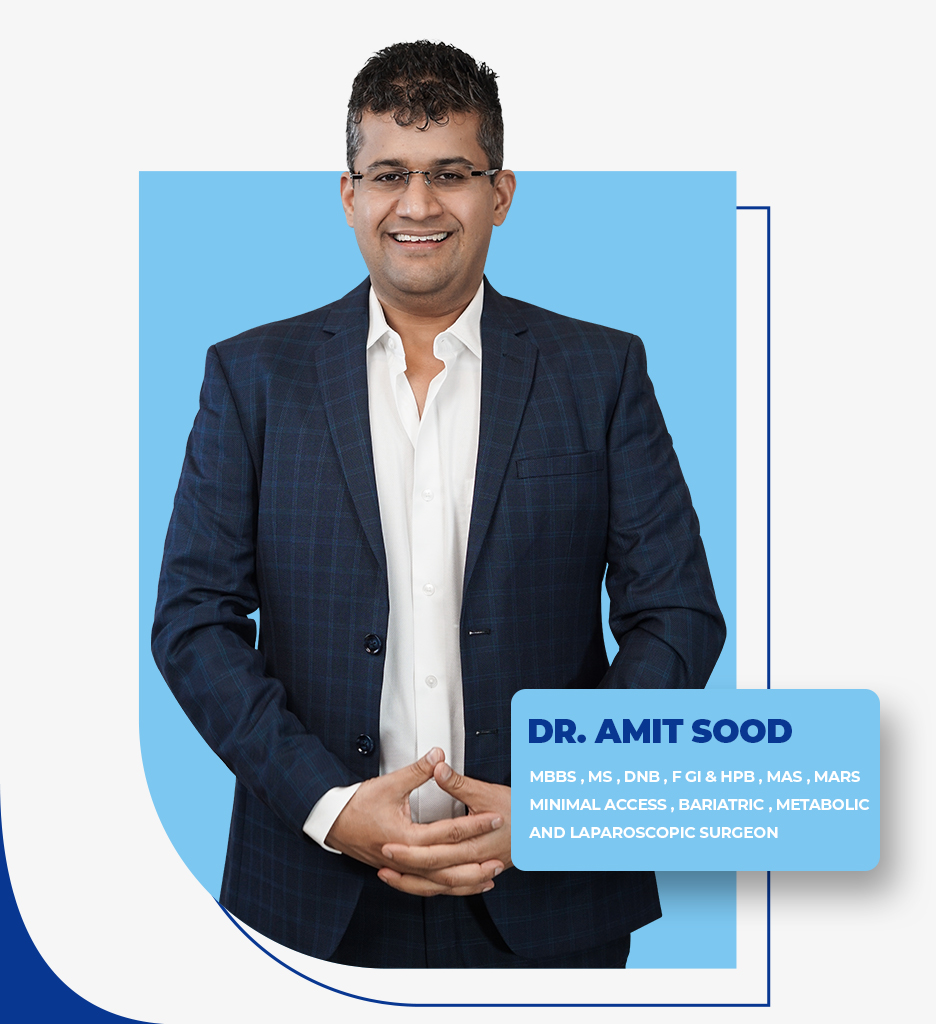
MBBS , MS , DNB , F GI & HPB , MAS , MARS
Minimal Access , Bariatric , Metabolic and Laparoscopic Surgeon
Dr. Amit Sood, who is the Founder & Director of CKOSMIC HEALTH CITY and his experience forms the core of the organization. He is one of the youngest Minimal Access, Bariatric, Metabolic, Laparoscopic and Endoscopic Surgeon in India and has also been awarded with a Gold Medal in surgery.in surgery.